Reasons Garbage Disposals Start Leaking
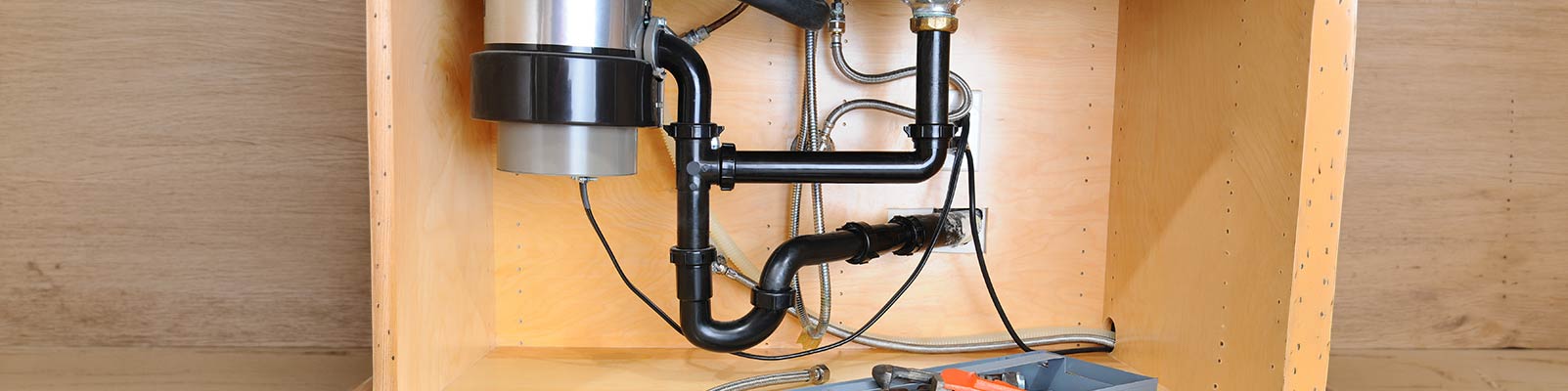
Garbage disposals leak for several reasons. Identifying the cause early limits the spread of water damage in the affected areas. Watch out for these:
Deteriorated seals around the drain allow water to leak continuously.
A loose mounting ring lets water seep out from the sink connection.
A cracked disposal body releases water directly into the cabinet below.
Failing drain or inlet pipe connections let water drip at every cycle.
Repeated vibration loosens internal components and connection points.
Old or compressed gaskets no longer create a watertight seal inside.
Areas Affected by Disposal Leaks
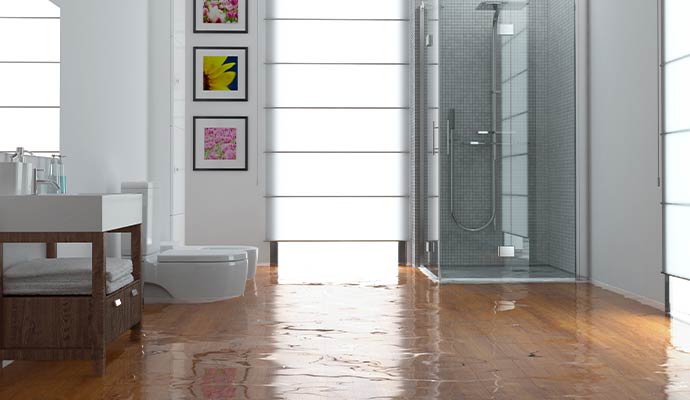
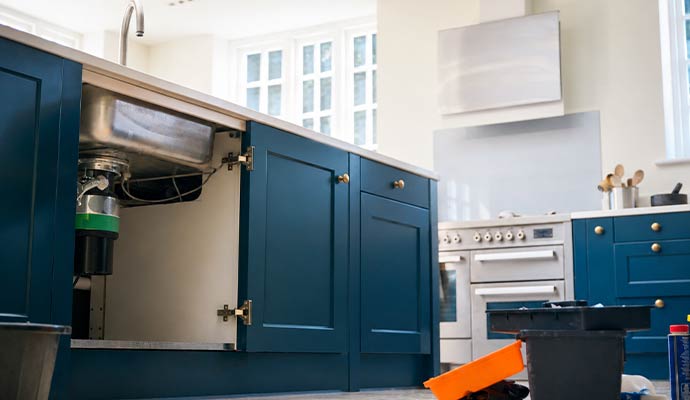
Water from a disposal leak collects inside the sink cabinet first, soaking the base and saturating the cabinet walls. From there, the moisture spreads into the flooring beneath the sink and reaches adjacent drywall or baseboards.
In commercial kitchens, the same damage occurs under sinks and in surrounding cabinetry used for storage. Disposal leaks in these properties often affect more materials due to the volume of water from regular use.
Signs of Disposal Water Damage
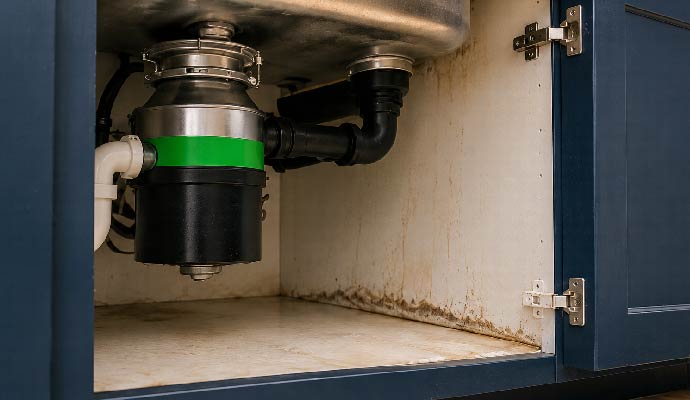
Water damage from a disposal leak produces several visible signs. Identifying them early limits how far moisture spreads before restoration can begin.
- Swollen cabinet base: The cabinet floor feels soft or shows visible warping.
- Under-sink stains: Water stains or discoloration on the cabinet walls and base.
- Musty odors: A persistent odor inside the cabinet indicates trapped moisture.
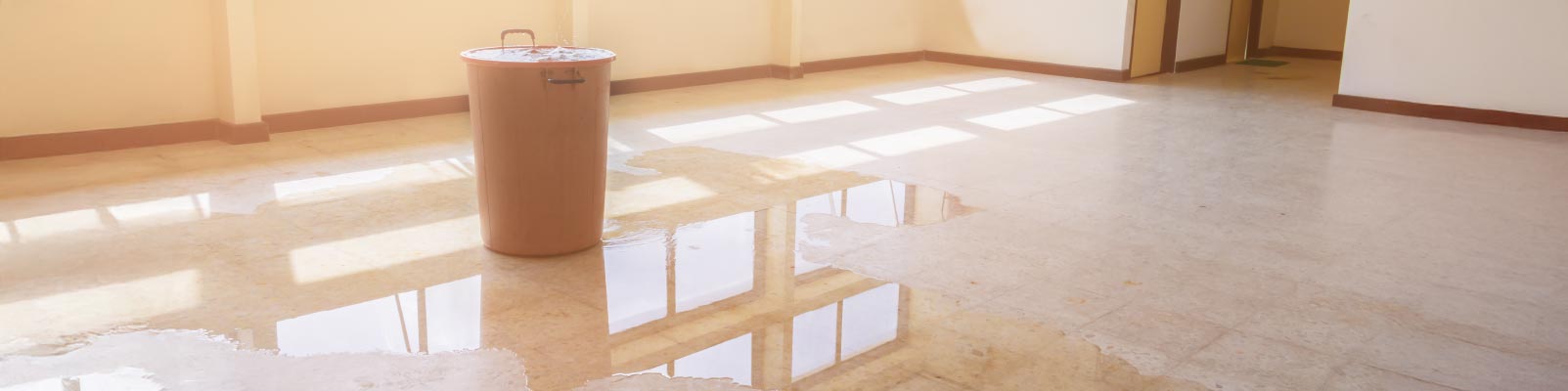
- Pooling water: Water accumulating at the base of the cabinet after disposal.
- Peeling finishes: Cabinet surfaces bubble or peel after moisture exposure.
- Loose flooring: Flooring around the area lifts or warps from water intrusion.
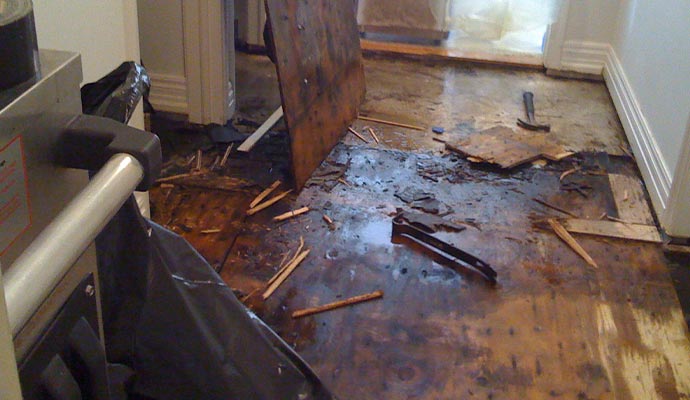
Risk of Water Damage Under the Sink
Water collecting beneath a sink often spreads beyond the cabinet into nearby flooring and surrounding materials. Because much of this moisture stays hidden, the damage continues to spread before anyone notices it.
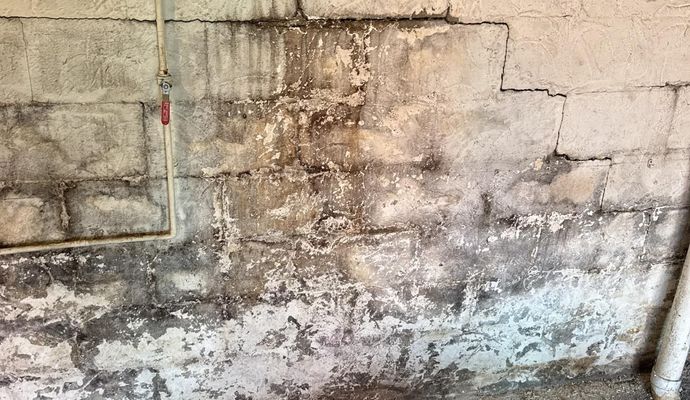
Even after the leak is repaired, moisture absorbed into nearby materials can continue causing damage. Over time, the trapped moisture leads to mold growth and weakened floors.
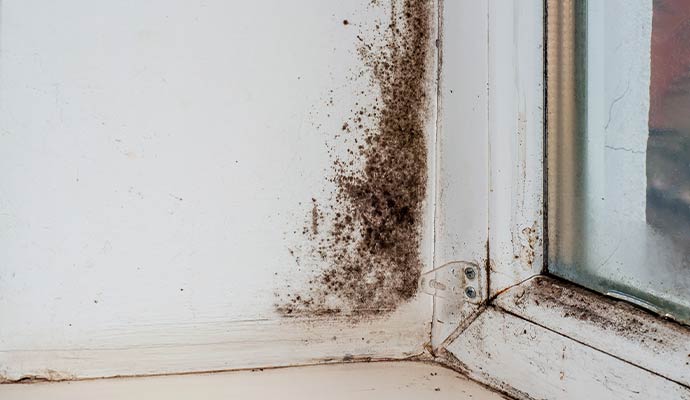
Disposal Leaks Lead to Mold Problems
A leaking garbage disposal creates constant moisture beneath the sink, giving mold the damp conditions it needs to spread. Because most of the moisture stays hidden inside cabinets or behind nearby materials, most people don't notice it.
At Panhandle Cleaning & Restoration, we provide mold remediation services for homes and businesses affected by moisture and plumbing leak-related mold growth.
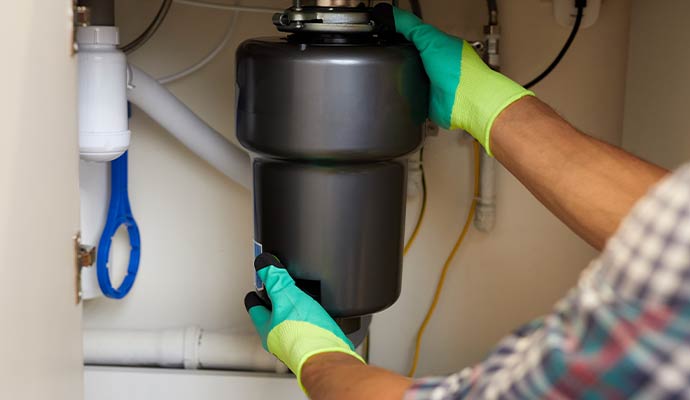
Disposal Leaks Need Professional Cleanup
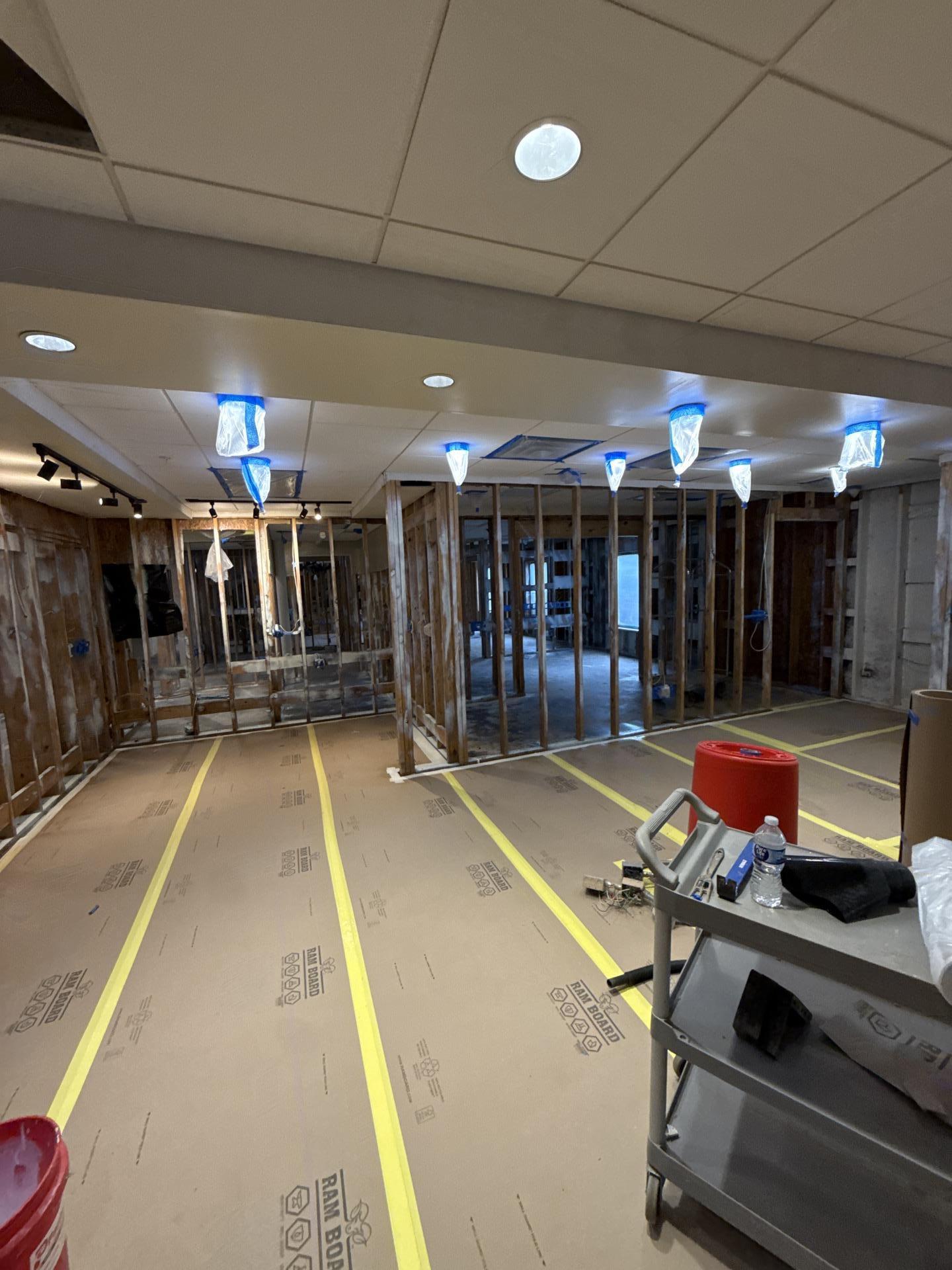
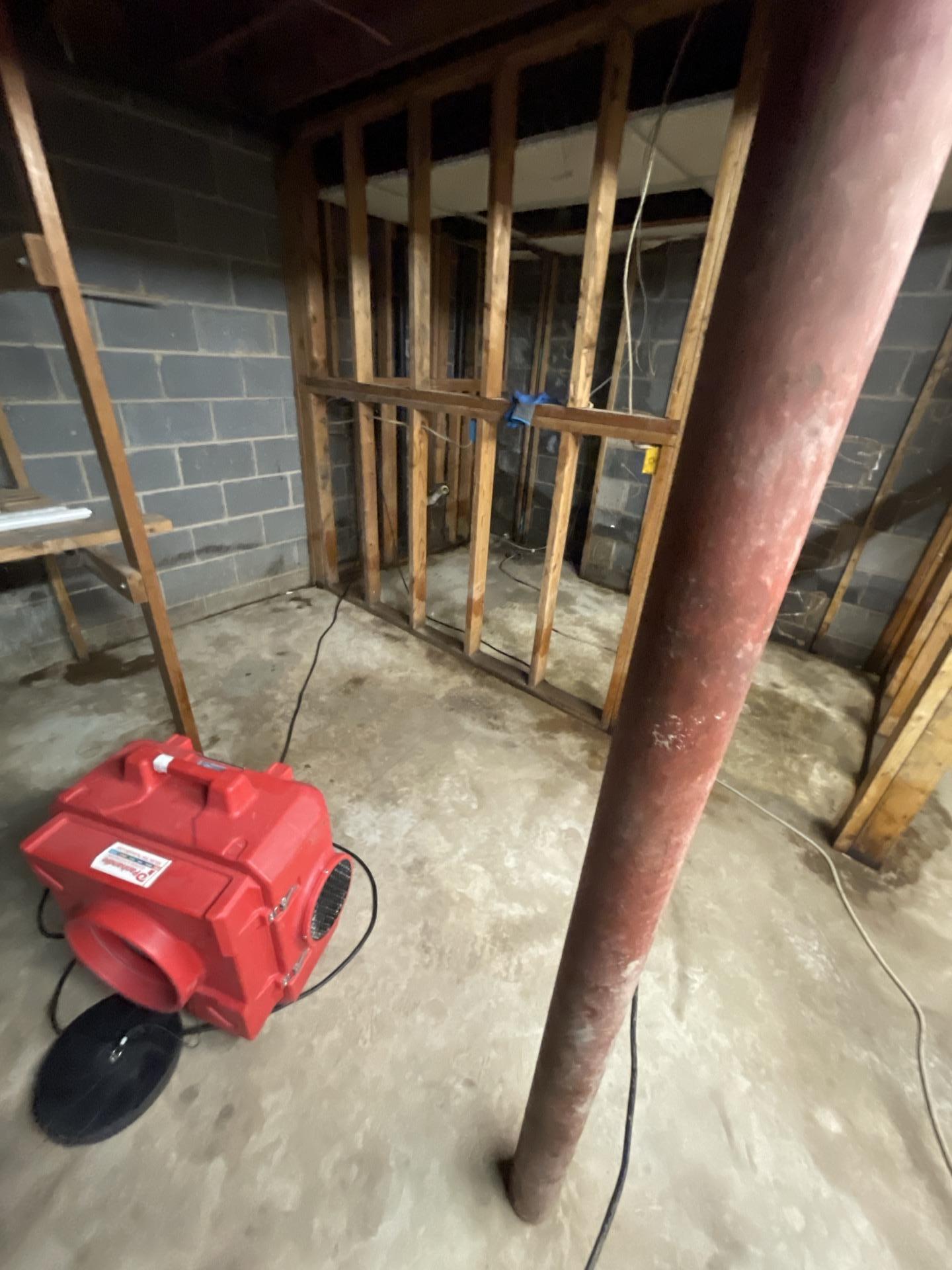
A disposal leak spreads moisture beneath sink cabinets and into the surrounding flooring. While DIY cleanup methods may dry the surface, moisture can remain trapped inside cabinet bases, flooring, and nearby walls.
Improper cleanup also leaves behind moisture, allowing mold growth and water damage to spread after the leak is repaired. At Panhandle Cleaning & Restoration, we use the latest drying and restoration equipment to remove moisture from all affected areas.
More Ways We Address Water Damage
Garbage disposal leaks are one of many sources of water damage we address in Wheeling, Huntington, Morgantown, Charleston, and nearby locations. We also offer other restoration services, including:
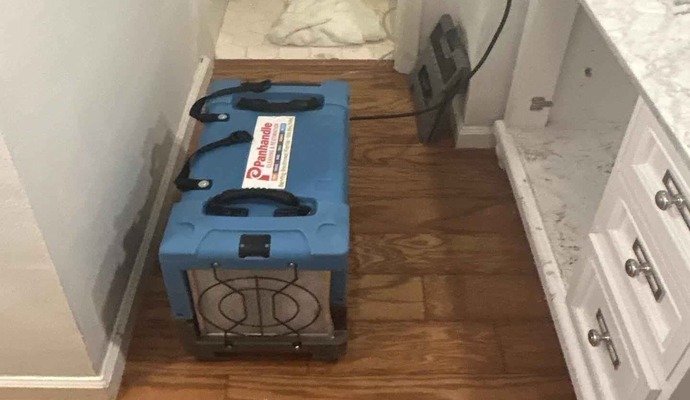
 Water Damage Repair
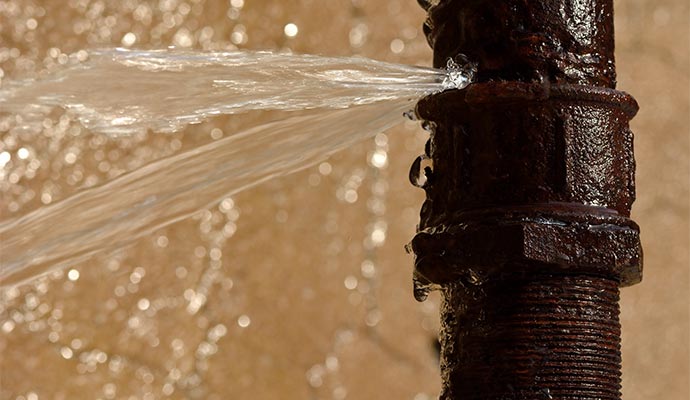
 Pipe Break Damage
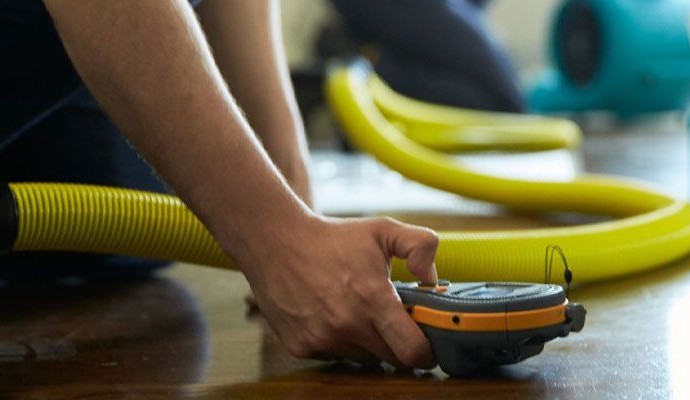
 Water Removal
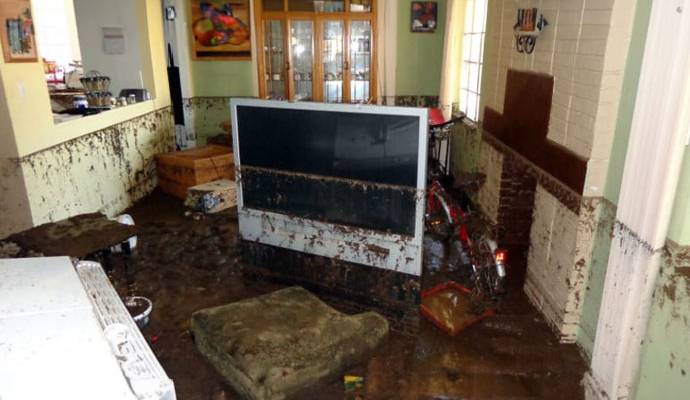
 Flood Damage
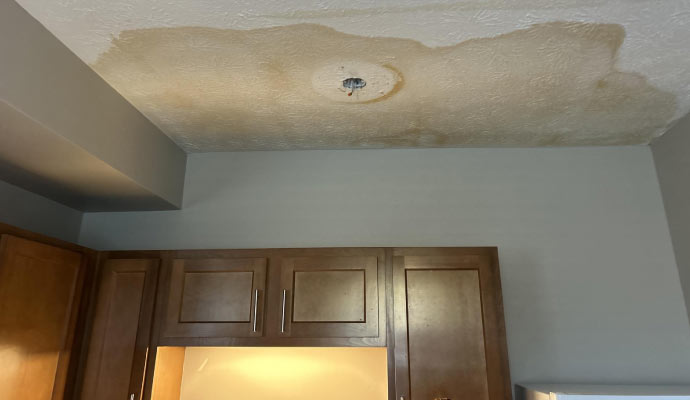
 Roof Leak Damage

 Appliance Leak Cleanup
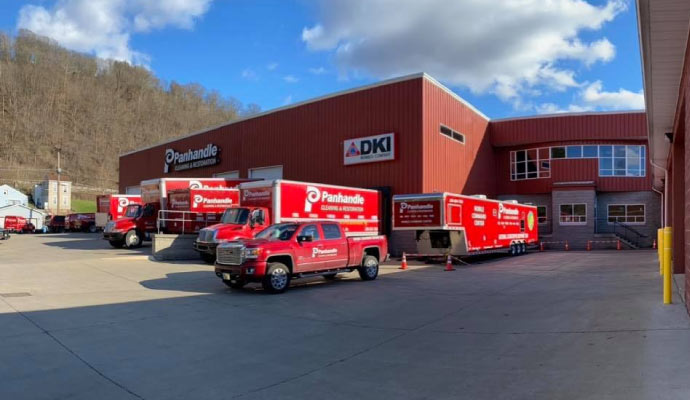
Call Us Now for Garbage Disposal Leak Cleanup and Restoration
A leaking garbage disposal can turn a small kitchen issue into a much larger water damage problem. Taking action early helps limit the spread of damage and reduces the risk of mold growth.
Call Panhandle Cleaning & Restoration or go to our online request form today to book our plumbing leak cleanup and restoration after damage from a leaking garbage disposal.
866-515-2364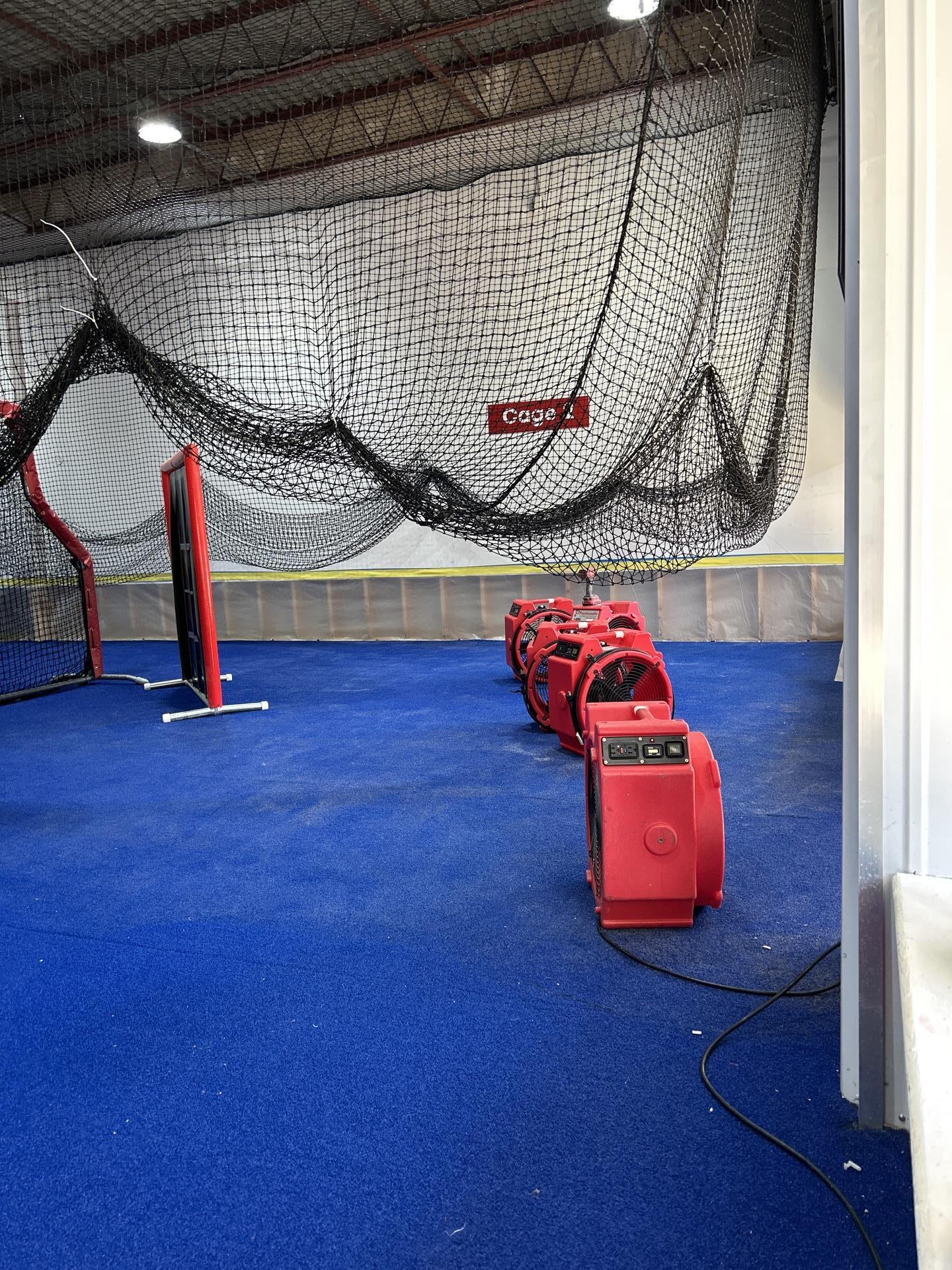
4.93 out of 565 reviews

Other pages you may be interested in...